Manufacturing Design at Apple
I spent a year improving assembly yield, cutting costs, and refining manufacturing processes for high-volume consumer hardware.
Quick Overview
The essential details you need to understand this project at a glance.
~ 30 sec read
WHY
- •On high-volume hardware, small changes on the factory floor can affect yield, cost, and cosmetic quality.
- •As a Manufacturing Design Engineering intern, I worked on yield issues, cost reductions, and assembly bottlenecks.
- •My work spanned metal injection molding, CNC machining, surface finishing, and final assembly.
WHAT
- •Drove $2.8M+ in savings through DFM optimizations, targeted design changes, and a novel surface-finish process that improves corrosion resistance and tunes color without PVD.
- •Raised assembly yield from 65% to 99.7% through tolerance-stack reduction, design changes, and added feedback in the assembly control loop.
- •Introduced laser welding into the assembly process, cutting assembly time by 50% and total assembly cost by 40%.
HOW
- •Designed CNC, sintering, and assembly fixtures in Siemens NX, drove MIM tooling from cold to hot runner, and qualified an alternative material for a 71% raw-material cost reduction.
- •Ran failure analysis, root-cause investigations, and DOEs (JMP, Python) — including a 4× improvement in a critical strength metric and resolving a 0%-yield proto-build blocker in 10 days with on-site factory support.
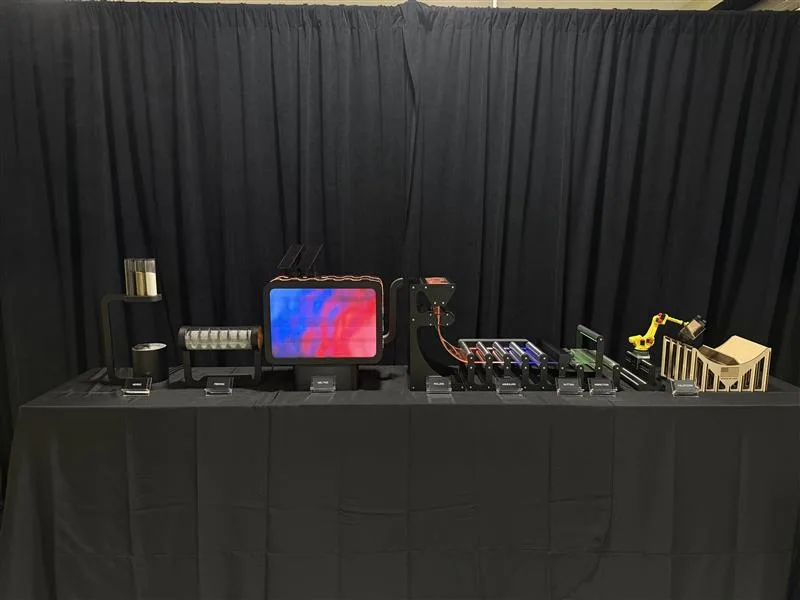
- •Built a hands-on tabletop factory demonstration presented to Apple's CEO, factory leadership, and press for a new US manufacturing partnership.
The Deep Dive
A detailed look into the personal learnings, implementation challenges, and outcomes from this project.
~ 3-5 minute read
Takeaways and Reflection
Most of this work is under NDA, so this page stays at the level of outcomes rather than products and processes. What I can share is what the year taught me: manufacturing is where engineering gets honest. A part that's perfect in CAD means nothing if it can't be made, finished, and assembled at scale with good yield. I learned to own a problem end-to-end — from the data that proves it exists, through the root cause, to the design or process change that fixes it, to getting vendors and cross-functional teams (system PD, cable PD, EE, factory operations) to actually adopt it.
Approach & Implementation
The pattern that worked, over and over: be systematic and bring data. When mechanical performance dropped, that meant thorough failure analysis and root-cause work before touching anything. When a strength metric was failing on injection-molded components, that meant designing DOE experiments, analyzing them in JMP and Python, and iterating with vendors until we had a 4× improvement. When assembly was the bottleneck, that meant tolerance analysis to find where yield was actually being lost, then attacking it from three sides at once — reducing the tolerance stack, improving the assembly design, and adding feedback to the assembly control loop.
Findings & Conclusion
The cumulative result was over $2.8M in savings: a material switch cutting raw material cost 71%, a laser-welding process cutting assembly cost 40%, corrective process changes improving yield strength 108%, and assembly yield climbing from 65% to 99.7%. When a proto build hit a 0%-yield blocker, systematic root-causing and on-site factory support resolved it in 10 days and the build delivered on schedule. And at the end of the year, I designed and built a tabletop factory demonstration used to communicate a new US manufacturing partnership to Apple's CEO, factory leadership, and press.
Technologies & Skills