Tabletop Factory Model
A ten-foot working miniature of Corning's Harrodsburg glass plant, built with a small team during my Apple internship so stakeholders and press could understand the process without walking the factory floor.
CNBC: Jim Cramer speaks with Tim Cook at Corning's Harrodsburg plant↗Quick Overview
The essential details you need to understand this project at a glance.
~ 30 sec read
WHY
- •Corning's plant in Harrodsburg, KY makes glass for Apple — and the process is genuinely impressive, but the floor is hot ovens, catwalks, and restricted areas you can't walk visitors past.
- •With a new US manufacturing partnership being announced, stakeholders and press needed to understand the whole process without a plant tour.
- •The ask, during my Apple internship: a tabletop model that demonstrates the factory's process flow at a glance — on a very short timeline.
WHAT
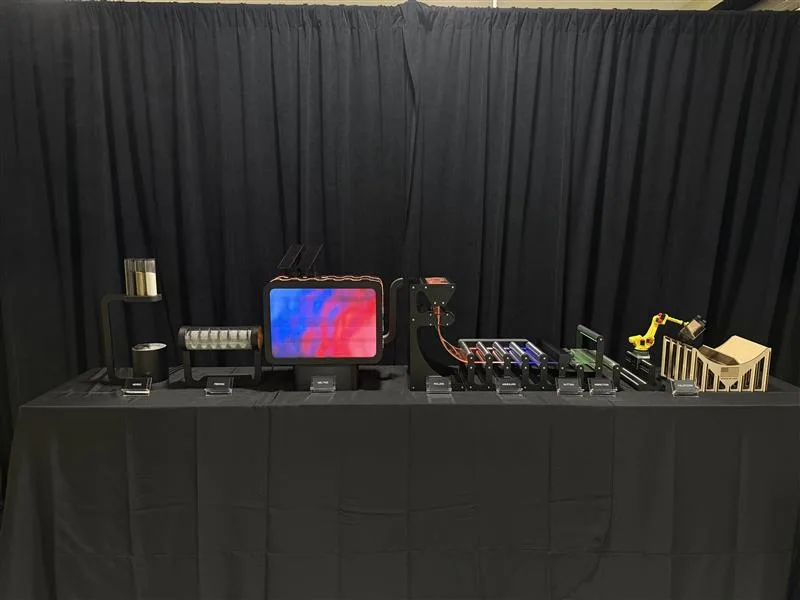
- •A ten-foot tabletop model of the plant's full process flow — sand silos, mixing, auger feeding, oven melting, hopper extrusion, rolling and annealing, cutting, and palletizing — with real motion and programmed light standing in for the machinery.
- •Built with a small team — another intern and our manager, who had done much of the initial CAD before I joined the project.
- •My scope was motion, electronics, and lighting, plus CAD for parts that were machined and anodized as well as 3D-printed.
HOW
- •Drove the model's motion with NEMA stepper motors running off a Duet 3D-printer controller board, and handled the wiring to tie everything together.
- •Programmed the lighting on an Arduino, plus a Raspberry Pi driving the LED-matrix animation that stands in for the melting oven.
- •Traveled to Harrodsburg for installation and pre-event troubleshooting — chasing down loose wiring and printing spares for parts that turned out more fragile than expected.
Visual Documentation
The finished model staged for the event — ten feet of process flow, from sand silos to palletizing
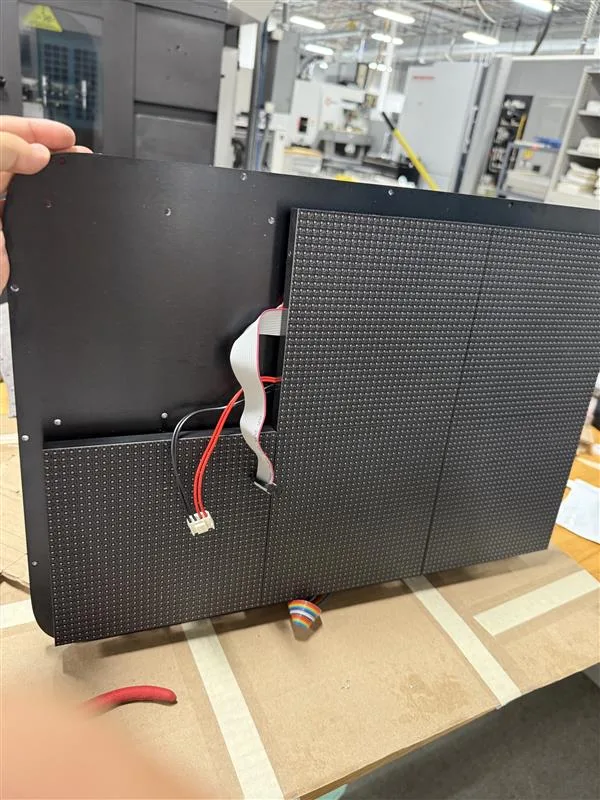
Assembling the Raspberry Pi-driven LED matrix that stands in for the melting oven, on the shop floor in Harrodsburg
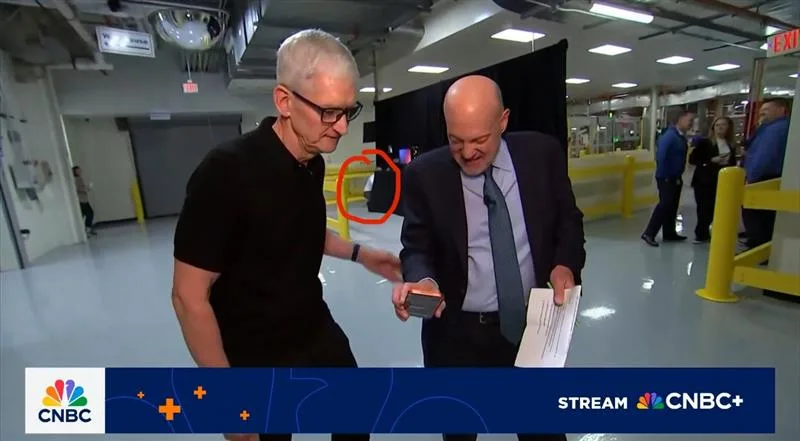
The model (circled) in the background of CNBC's segment with Tim Cook and Jim Cramer at the plant
The Deep Dive
A detailed look into the personal learnings, implementation challenges, and outcomes from this project.
~ 3-5 minute read
Takeaways and Reflection
The timeline was the hard part: the event date was fixed, and a working model of an entire factory process had to exist by then — which meant a lot of extra nights and weekends. I also joined a project already in motion. Our manager had done much of the initial CAD before I came on, so the job was to pick up that design intent, fill in everything the model still needed — motion, electronics, lighting — and get it all working together as one piece.
Approach & Implementation
We split the work across the three of us and iterated fast. The model walks through the plant's whole flow — sand silos, mixing, auger feeding, oven melting, hopper extrusion, rolling and annealing, cutting, palletizing — across ten feet of tabletop. For motion, I used NEMA stepper motors driven by a Duet 3D-printer controller board — an off-the-shelf way to coordinate multiple axes without designing custom electronics from scratch. Lighting ran on an Arduino, with a Raspberry Pi animating the LED matrix that stands in for the melting oven, and I did CAD for parts across the model — a mix of machined and anodized components and 3D-printed ones depending on what each piece needed.
Findings & Conclusion
I traveled to the plant in Harrodsburg, KY for installation and pre-event troubleshooting — reseating loose wiring from transit and printing spares for parts that proved more fragile than expected. The model was shown to Corning's CEO, who then walked Apple CEO Tim Cook through it during his plant visit. It's even visible in the background of CNBC's segment from the plant that day. But the part I keep coming back to is simpler: a process you'd normally need a hard hat and an escort to see, made legible on a tabletop.